Get From the Official Digital Markets
All trademarks belong to their
respective owners.
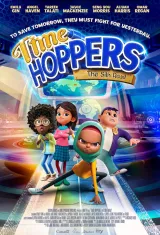
Time Hoppers: The Silk Road Summary
Time Hoppers: The Silk Road Photo Gallery
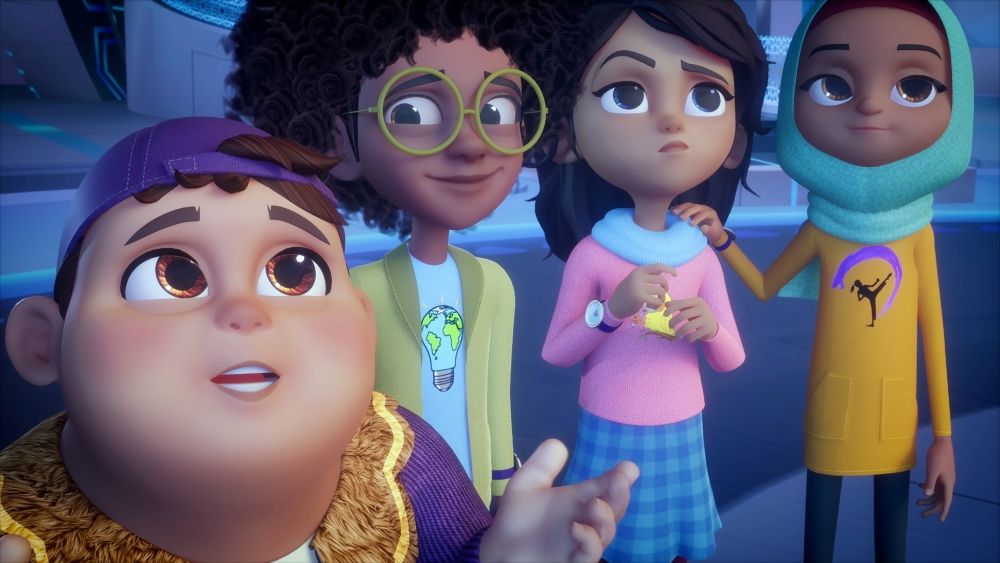

A time-travel odyssey told like an old trader’s tale
Every so often, a film arrives that feels less like a product and more like a story passed from hand to hand, like silk or spice moving across borders. Time Hoppers: The Silk Road struck me that way from its first frames. As an experienced film enthusiast who has followed both historical dramas and science fiction for years, I’ve seen plenty of attempts to fuse the two genres. Most lean too heavily on spectacle or drown in exposition. This one chooses a quieter, more reflective path, and in doing so, it becomes something unexpectedly memorable.
The premise is deceptively simple. A team of modern researchers discovers a relic capable of shifting its holder across time along the ancient Silk Road. What could have been a chaotic chase through eras instead becomes a carefully observed meditation on connection, commerce, and culture. The film treats time as terrain to be crossed, not a puzzle to be solved. That decision shapes everything that follows.
An opening that favors atmosphere over noise
Director Kenji Morita resists the urge to start big. There’s no thunderous action sequence or breathless narration. Instead, we begin with dust, wind, and distant bells. Archaeologist Laleh Rahimi studies the remains of a trading outpost while her team catalogues fragments of pottery and metal. The camera lingers on small details: sand slipping through fingers, inscriptions half-buried. When the strange device activates and folds time around her, the moment feels eerie rather than explosive.
From there, the movie unfolds like a travel diary. Each jump deposits Laleh in a different century, yet the tone remains consistent: observant, curious, patient. I found myself leaning in, not because I expected chaos, but because I wanted to see where history would carry her next.
Chaptered storytelling that mirrors a journey
The structure resembles a series of connected vignettes. One segment places us in Tang dynasty China, amid bustling markets and scholars debating astronomy. Another shifts to medieval Samarkand, where caravans arrive with textiles and glassware. Later, the Ottoman era brings political tension and intrigue, and finally a near-future trade hub shows how little and how much the world has changed.
Each chapter stands on its own yet feeds into a larger emotional arc. Rather than racing between periods, the film allows scenes to breathe. We watch negotiations unfold, children playing in courtyards, artisans working by lamplight. This attention to daily life is what sets the movie apart. It doesn’t reduce history to backdrops. It lets us live there, briefly.
As someone who values immersive cinema, I appreciated how this approach builds empathy. You’re not just observing eras; you’re sharing space with them.
Performances that anchor the fantasy
Arienne Mendez carries the film with a performance that feels grounded and intelligent. Laleh isn’t a fearless daredevil. She’s thoughtful, sometimes hesitant, and often overwhelmed. That vulnerability makes her believable. When she forms bonds with people from different centuries, the relationships feel genuine rather than convenient plot devices.
The supporting cast rotates, yet several actors appear in multiple roles across time. It’s a clever touch that suggests generational echoes without spelling anything out. A trader in one era resembles a tech courier in another. A scholar’s face mirrors that of a future engineer. These parallels subtly reinforce the idea that human ambitions repeat, even when technology changes.
Dialogue stays natural and restrained. Characters speak about family, survival, and opportunity more than grand destiny. That grounded writing helps the time-travel elements blend seamlessly into the drama.
Visual richness that rewards careful watching
Cinematography is easily one of the film’s greatest strengths. Wide shots of deserts and mountains give the story an epic scope, while intimate close-ups capture the texture of silk, parchment, and weathered stone. Every frame seems carefully composed, yet never stiff.
The color palette evolves with each era. Warm golds and reds dominate the ancient segments, cooler blues and steel tones shape the future scenes. Even when you stream the film online or download it to watch later, those contrasts remain striking. It’s the kind of visual design that elevates home viewing on modern platforms.
The sound design deserves mention too. Wind, hooves, market chatter, and distant music blend into a living soundscape. The score mixes traditional instruments with subtle electronic notes, linking past and future in a way that feels organic rather than forced.
Themes that linger after the credits
What impressed me most wasn’t the time-hopping itself but the questions the film asks. Who owns history? What does it mean to remove an artifact from its context? Is progress simply another form of trade, exchanging old ways for new ones?
There’s a recurring idea that the Silk Road was less about goods and more about stories. Languages merge. Recipes evolve. Beliefs travel. Laleh slowly realizes she isn’t meant to change events but to witness them. Her role is that of a bridge, not a hero. It’s a refreshingly humble message in an era of oversized protagonists.
Still, the film isn’t flawless. Its deliberate pacing may test viewers expecting constant excitement. A late explanation about the device’s origin feels overly neat, slightly reducing the mystery. Yet these are small issues in an otherwise thoughtful work.
Closing impressions
Time Hoppers: The Silk Road is the kind of film that quietly earns your admiration. It doesn’t demand attention with noise or excess. Instead, it invites you to sit with it, to observe, to reflect. As a longtime reviewer, I value movies that respect their audience’s intelligence, and this one certainly does.
By the end, I felt as though I had traveled not just through centuries but through the shared experiences that define humanity. Few science fiction adventures leave me contemplative rather than exhilarated. This one does both, in its own measured way. It’s the sort of movie you recommend to friends with the simple phrase: take your time with it.
How to watch Time Hoppers: The Silk Road online
Availability & Access: The movie is available to stream online through several licensed platforms. It typically requires a subscription or rental fee, though occasional free trials may allow temporary access. Age Rating (US-based): PG-13 for thematic elements and mild peril.
Netflix hosts the film in select regions with streaming and a download option for offline viewing. Amazon Prime Video offers rent or purchase choices and supports offline access in its app. Apple TV provides high-quality rent or buy options with easy downloads. Peacock includes it on its premium tier rather than free access. Hulu rotates it into its catalog for subscribers with limited download features. YouTube Movies allows you to rent or buy and download through the mobile app for convenient viewing on the go.